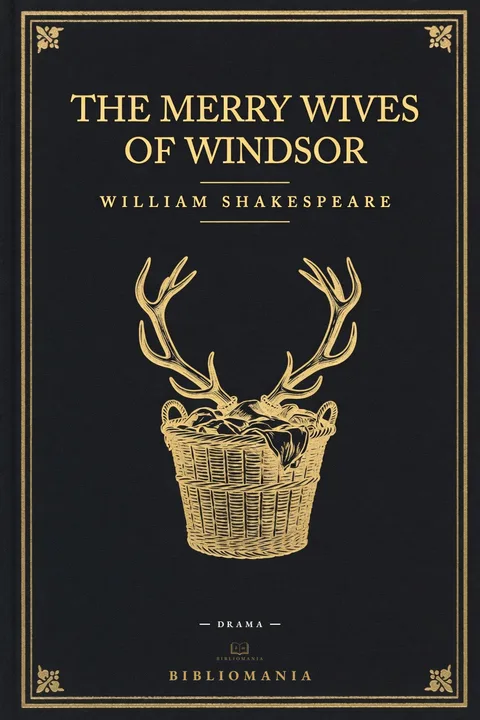
Merry Wives of Windsor
Summary
The Merry Wives of Windsor is one of the best loved of Shakespeare's comedies and also contains the highest proportion of prose of any of his plays. Its central character is Falstaff who had been a roaring success with audiences in Henry IV part i and part ii , although in this incarnation he bears little resemblance to his previous character. The may have been performed or at least written for the occasion of the installation of Lord Hunsdon as a knight of the Garter on 23 April 1597, although John Dennis a century later claimed that the bard had written the play on the order of Elizabeth I who wished to see Falstaff in love. Some place the play's creation as late as 1601 however. In printed form the play exists in the 'bad' quarto text of 1602 and in the much more substantial Folio of 1623 (the version that includes Garter Feast references). The play involves the ritual humiliation of Sir John Falstaff who is flirting with two married women for financial gain. Falstaff sends identical love letters to Mrs Ford and Mrs Page and he ends up thrown in a dirty ditch and beaten while in disguise as the 'fat woman of Brainford' by Mr Ford. His final embarrassment at Herne's oak is the worst, however. While all this goes on there is the matter of Page's daughter to be dealt with. Her three suitors (Doctor Caius, Slender and young Fenton) try to win the approval of her parents but the true lover of Anne Page ends up the victor in hilarious circumstances.
Table of contents
- part i
- part ii
- Dramatis Personae.
- Scene 1.
- Scene 2.
- Scene 3.
- Scene 4.
- Scene 1.
- Scene 2.
- Scene 3.
- Scene 1.
- Scene 2.
- Scene 3.
- Scene 4.
- Scene 5.
- Scene 1.
- Scene 2.
- Scene 3.
- Scene 4.
- Scene 5.
- Scene 6.
- Scene 1.
- Scene 2.
- Scene 3.
- Scene 4.
- Scene 5.
More by William Shakespeare
Other Drama classics
- Provoked Wife — Sir John Vanbrugh
- Misanthrope — Moliere
- Country Wife — William Wycherley
- Bonduca — Beaumont and Fletcher
- Plays by Moliere — Moliere
- Beggar's Opera — John Gay