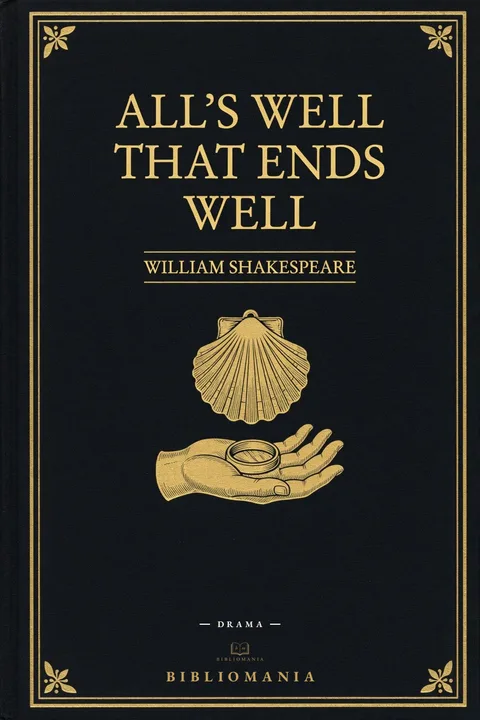
All's Well That Ends Well
Summary
All's Well That Ends Well is one of Shakespeare's so-called "problem comedies". That is to say that it seems to contain the typical themes of a romantic comedy and yet is so bleak in places and the subject matter often so unromantic that it doesn't fit easily into the comedy category. It is now widely seen to have been written 1603-4 due to its similarities with Measure for Measure . Its source is a tale from Boccaccio's Decameron (Day 3, Tale 9) although Shakespeare is likely to have read it in Painter's Palace of Pleasure (1566-7). The central plot concerns physician's daughter Helena who is rewarded by the king of France for her cure for his illness with the right to marry Bertram, count of Rousillon. Influenced by Parolles (a dubious braggart who has a substantial subplot of his own), Bertram goes into the service of the duke of Florence. Bertram has not married Helena willingly. So begins Helena's attempt to ensnare Bertram after he writes a letter to her demanding seemingly impossible conditions for their continued marriage, with devious disguise and deception similar to that in Measure for Measure . There is a comedy ending (i.e. a happy one) but the story is essentially a sad or tragic-comic one.
Table of contents
- Measure for Measure
- Dramatis Personae.
- Scene 1.
- Scene 2.
- Scene 3.
- Scene 1.
- Scene 2.
- Scene 3.
- Scene 4.
- Scene 5.
- Scene 1.
- Scene 2.
- Scene 3.
- Scene 4.
- Scene 5.
- Scene 6.
- Scene 7.
- Scene 1.
- Scene 2.
- Scene 3.
- Scene 4.
- Scene 5.
- Scene 1.
- Scene 2.
- Scene 3.
More by William Shakespeare
Other Drama classics
- Provoked Wife — Sir John Vanbrugh
- Misanthrope — Moliere
- Country Wife — William Wycherley
- Bonduca — Beaumont and Fletcher
- Plays by Moliere — Moliere
- Beggar's Opera — John Gay